
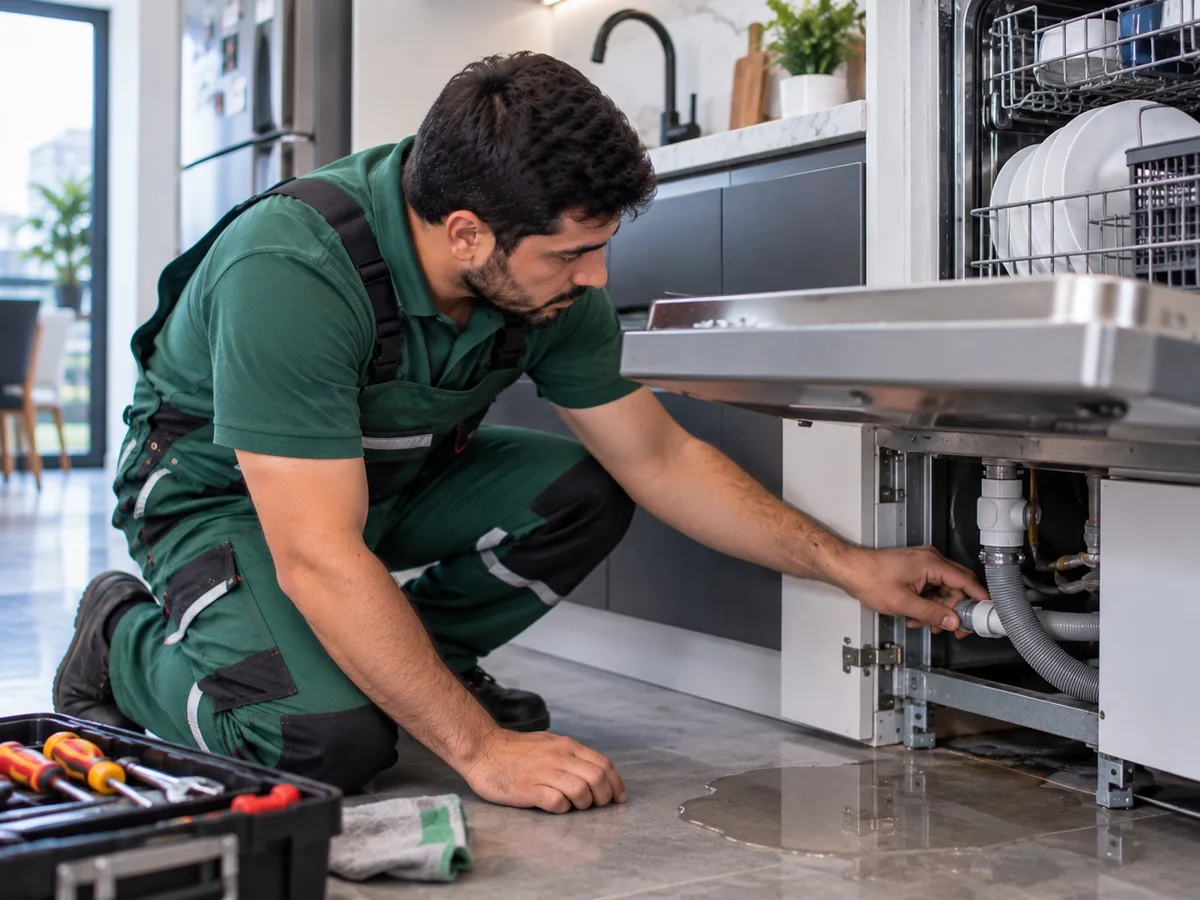
Water appearing under the dishwasher during operation or after the program has finished is a problem that requires attention. Even if the leak starts small, over time it can damage the flooring, kitchen furniture, and electrical components of the appliance.
The first step is to determine whether the water is actually leaking from under the dishwasher. Sometimes water leaks from a hose connection at the back of the appliance and collects underneath, making it difficult to identify the true source of the leak.
One of the most common causes is a leaking water inlet hose. A damaged hose, loose connection, or worn rubber gasket can cause water to run down the back of the appliance.
A similar problem can occur with the drain hose. If the drain hose has a crack, hole, or loose connection, water may leak onto the floor while the dishwasher is draining.
If the leak occurs only during the draining stage, there is a greater possibility of a problem with the drain hose, drain pump, or their connections.
If the drain pump housing is cracked, its seal is worn, or a connection is loose, water may collect underneath the appliance. This type of problem requires a technical inspection of the lower section of the dishwasher.
Another possible cause of water under the dishwasher is the circulation pump and its connections. If the pump seal or hose connections become worn over time, water may leak during the washing cycle.
A worn or damaged door seal can also cause leakage. If the door does not close tightly, water may escape from the front during washing and spread underneath the appliance.
Food residue and dirt accumulated on the door seal can also prevent the door from closing properly. If the seal is visibly dirty, cleaning it according to the manufacturer's instructions may help.
An improperly leveled dishwasher can also cause water to collect near the door and, in some cases, leak outside. The appliance should stand firmly and level on the floor.
In some cases, excessive foaming can cause water to leak from the dishwasher. Using detergent that is not designed for dishwashers or adding too much detergent can produce excessive foam.
If the water level inside the dishwasher rises above normal, it may also result in a leak. This can be caused by a faulty water inlet valve, water level sensor, or other components responsible for controlling the amount of water entering the appliance.
A blocked filter or drainage system can prevent water from draining properly. As a result, the water level inside the appliance may rise and leakage may occur through a loose connection or another weak point.
Regularly cleaning the filter according to the manufacturer's recommendations helps prevent food residue from accumulating in the drainage system.
Over time, cracks or loose connections may also develop in the dishwasher's internal water lines, hoses, and connecting components. These types of leaks are usually difficult to see without accessing the lower section of the appliance.
Some models have a leak sensor and protection system in the lower section. If water collects in the bottom tray, the dishwasher may stop the program, run the drain pump continuously, or display an error code.
If water is found leaking from under the dishwasher, it is recommended to disconnect the appliance from the power supply and shut off the water supply for safety.
Because electrical components may come into contact with water, continuing to operate the dishwasher while it is leaking can be dangerous.
The user can inspect the visible sections of the water inlet and drain hoses, the door seal, filter, and external connections. However, removing the lower section of the appliance and working on the pumps requires technical knowledge.
A professional dishwasher technician can determine at which stage the leak occurs and inspect the water inlet hose, drainage system, pumps, seals, door gasket, valves, and internal connections.
Identifying the source of the leak in time can help prevent more serious dishwasher problems as well as water damage to the flooring and kitchen furniture.