
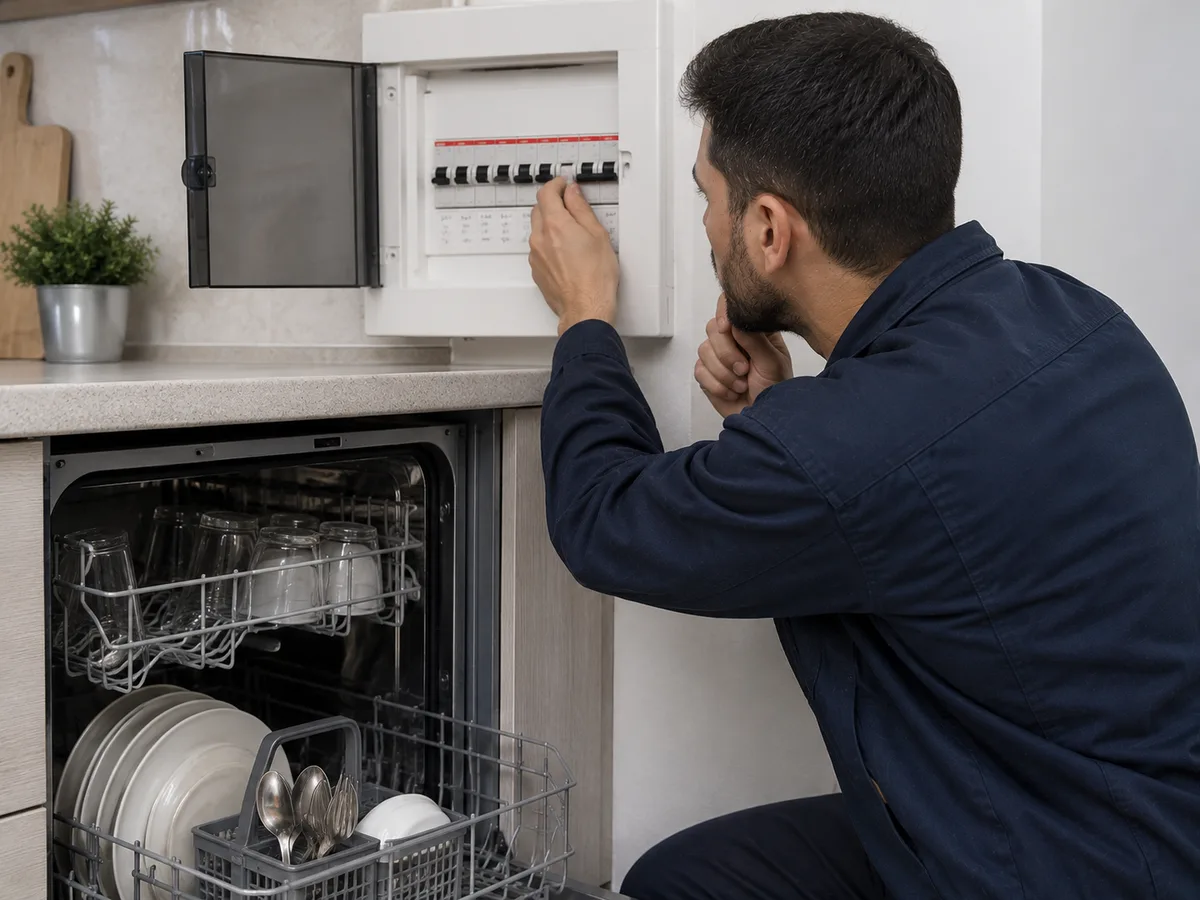
A dishwasher tripping the circuit breaker is a problem that should not be ignored. Sometimes the breaker trips immediately after the appliance is connected to the power supply, while in other cases the power cuts out a few minutes after the program starts, during water heating, or at a certain stage of the wash cycle. The stage at which the problem occurs can help identify the possible cause.
First, it is important to determine whether the problem comes from the dishwasher itself or from the electrical circuit. If several high-power appliances are connected to the same circuit, the line may become overloaded and cause the circuit breaker to trip. Running the dishwasher together with an electric oven, kettle, microwave, or other high-power appliances on the same circuit can significantly increase the total electrical load.
A faulty heating element is one of the most common reasons a dishwasher trips the circuit breaker. The heating element is responsible for heating the water to the temperature required by the selected program. If the insulation of the heating element is damaged, electrical current may leak to the appliance body. In this situation, the circuit breaker or residual-current protection device may trip as soon as the dishwasher begins heating the water.
If the breaker trips some time after the program starts, especially during the water-heating stage, the heating element should be checked. However, accurate diagnosis requires professional testing with appropriate electrical measuring equipment.
A water leak inside the dishwasher can also cause electrical problems. If water leaking from a hose, pump, connection, seal, or another component reaches the wiring, electrical contacts, or electronic components, it may cause a short circuit or current leakage. Trying to restart the appliance in this condition can be dangerous.
A fault in the electrical section of the circulation pump or drain pump may also cause the breaker to trip. A short circuit in the motor windings, damaged insulation, or moisture inside the pump can increase the electrical load beyond normal levels. The stage of the program at which the dishwasher trips the breaker can help determine which pump may be responsible.
Damage to the power cable or plug is another possible cause. If the cable has been crushed, burned, or its insulation is damaged, a short circuit may occur between the wires or between a wire and the appliance body. If the plug shows signs of darkening, melting, or burning, the dishwasher should be disconnected from the power supply and should not be used.
A faulty electrical outlet should also be considered. Loose contacts, burned connections, moisture, or incorrect wiring can cause problems when a high-power appliance such as a dishwasher is operating. If the outlet becomes hot, shows signs of discoloration, or produces a burning smell, the electrical circuit should be inspected by a qualified electrician.
A faulty mains filter may cause the dishwasher to trip the breaker immediately after being connected to the power supply. The mains filter helps protect the appliance's electrical system from certain electrical disturbances and interference. If a short circuit develops inside the filter, the protection system may activate even before the wash program begins.
A problem with the electronic control board may also cause the fault. Water or moisture reaching the board, damaged electronic components, short circuits, or voltage fluctuations can cause the control system to fail. If there are burn marks or visibly damaged components on the board, professional repair may be required.
Electrical wires located around the dishwasher door can also become damaged over time. Repeated opening and closing of the door causes the wires to bend continuously, which may eventually damage their insulation or cause a wire to break. If a damaged wire touches a metal part of the appliance, it can create a short circuit and cause the breaker to trip.
For diagnosis, it is useful to pay attention to exactly when the problem occurs. If the dishwasher trips the breaker immediately after being plugged in, the power cable, mains filter, internal wiring, or electronic components should be checked. If it happens after the program starts, the pumps and other active components should be considered. If the breaker trips specifically while the water is heating, the heating element is one of the main possible causes.
The problem may also be related to the circuit breaker itself or the home's electrical wiring. Old cables, weak electrical connections, an incorrectly rated breaker, or an overloaded circuit can cause the power to cut out while the dishwasher is operating. Therefore, if no fault is found in the dishwasher, the household electrical circuit may also need to be inspected.
If the circuit breaker trips every time the dishwasher is switched on, do not repeatedly reset the breaker and try to run the appliance again. The circuit breaker is designed to disconnect the electrical supply when a potentially dangerous condition is detected. Restarting the appliance without identifying the cause can lead to more serious damage to electrical components and create a safety risk.
Pay attention to the following signs: if the dishwasher trips the breaker immediately after being connected to the power supply, produces a burning smell, the plug or outlet becomes hot, there is water underneath the appliance, the power cable is visibly damaged, or the breaker trips during every program, disconnect the dishwasher from the power supply and do not use it. Attempting to open and inspect the internal parts of an appliance that is connected to electricity can be dangerous.
If your dishwasher keeps tripping the circuit breaker, it is recommended to contact a professional dishwasher repair technician. The technician can diagnose the appliance and inspect the heating element, circulation and drain pumps, power cable, mains filter, internal wiring, possible water leaks, and electronic control board. Once the exact cause of the fault has been identified, you will be informed in advance about the required repairs and their cost.