
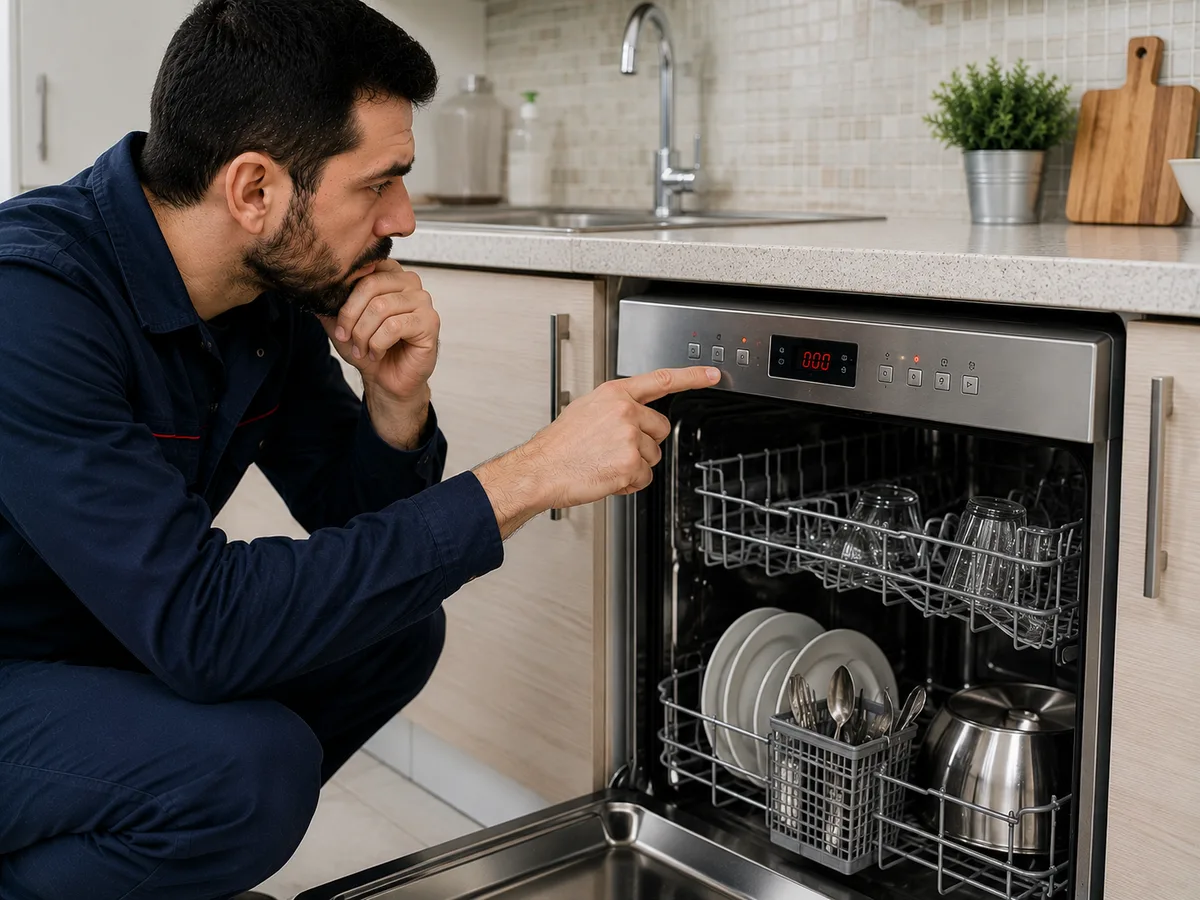
If the dishwasher does not turn on, the cause may be related to various electrical, electronic, or mechanical faults. In some cases, the display does not light up at all and the buttons do not respond, while in other cases the dishwasher turns on, the program can be selected, but the washing cycle does not start. The way the problem appears can help identify the possible cause of the fault.
First, check whether the dishwasher is receiving power. A lack of electricity at the outlet, a tripped circuit breaker, or damage to the power cable or plug can prevent the appliance from turning on completely. If the dishwasher display and indicator lights are completely off, the power supply is one of the first things that should be checked.
Damage to the power cable can also prevent the dishwasher from turning on. If the cable is crushed, melted, or internally damaged, electricity may not reach the appliance’s control system. If you notice darkened areas, melting, or burn marks on the plug, disconnect the dishwasher from the power supply and do not use it until the problem has been resolved.
A faulty electrical outlet should also be considered. Loose contacts, burnt connections, or a problem with the electrical line may prevent the dishwasher from receiving power. If the outlet becomes hot, shows discoloration, or smells burnt, it is recommended to have the electrical line checked by a qualified specialist.
A door that is not fully closed is one of the most common reasons why a dishwasher program does not start. For safety reasons, most dishwashers will not begin washing until the system receives confirmation that the door is completely closed. If the door does not close properly, the locking mechanism is stuck, or the door sensor is faulty, the appliance may detect the door as open.
If the door lock or microswitch is faulty, the dishwasher lights may turn on and the program may be selected, but the washing cycle may not begin after pressing the Start button. Some models may also display an error code. In this situation, the door mechanism and electrical contacts should be checked.
A lack of water supply may also prevent the program from starting. If the water valve is closed, the inlet hose is bent, the inlet filter is clogged, or the household water pressure is too low, the dishwasher will not be able to take in the required amount of water. Some dishwashers stop the program and display an error code when no water enters the appliance.
A faulty water inlet valve should also be considered. This valve opens when it receives a signal from the electronic control system and allows water to enter the appliance. If the electrical part of the valve is faulty, the mechanism is stuck, or the inlet is blocked, the dishwasher may fail to fill with water and therefore not start the washing cycle.
Some dishwashers are equipped with a leak protection system. If water collects in the lower section of the appliance, the protection system may activate and prevent the normal program from starting. This can be caused by a leak from an internal hose, pump, seal, connection, or another component.
If water from the previous program remains inside the dishwasher, a fault in the drainage system may also prevent a new program from starting. A clogged drain filter, a bent drain hose, or a faulty drain pump can make it difficult to remove water from the appliance. Some models will not begin a new washing stage until the water from the previous cycle has been completely drained.
When the drain pump is faulty, the appliance may attempt to start and make certain sounds, but the program may not continue. A foreign object inside the pump, a jammed impeller, or a fault in the electrical section of the pump motor can prevent normal drainage.
Faulty buttons on the control panel may also prevent the dishwasher from starting. The Start button, program selection buttons, or touch panel can wear out over time. If one or more buttons do not respond, the control panel and its electronic connections may need to be inspected.
In some cases, the dishwasher does not respond to buttons because the child lock or control lock is activated. In this situation, the appliance itself may be completely functional. The method for disabling the lock varies by model, so the instructions in the user manual should be checked.
An activated delay-start function can also make it appear that the dishwasher is not starting. If the program is set to begin after a certain period of time, the appliance will not start washing immediately after the Start button is pressed. Therefore, it is useful to check the timer and program settings as well.
A faulty electronic control board is a more serious possible cause. The control board manages the door lock, water inlet valve, pumps, heating element, sensors, and other components. Voltage fluctuations, moisture, water leaks, or damaged electronic components can interfere with its normal operation.
If the electronic control board is faulty, the dishwasher may not turn on at all, may not respond to buttons, may fail to start a program, or may stop immediately after beginning operation. However, these symptoms can also be caused by other faulty components, so a full diagnosis should be carried out before replacing the control board.
A faulty mains filter can also prevent electrical power from reaching the appliance’s electronic system properly. If the mains filter develops an electrical fault, the dishwasher may appear completely dead. This component should be checked using appropriate electrical measuring equipment.
A broken wire or poor electrical connection inside the dishwasher can also cause the appliance to stop working. Wires running through the door area are especially vulnerable because they are repeatedly bent whenever the door is opened and closed. If a wire breaks, certain components may stop receiving signals from the electronic control board.
Sometimes the dishwasher turns on, the display lights up, and a program can be selected, but nothing happens after pressing the Start button. In this case, the main components to check include the door lock, water inlet system, control panel, protection systems, and electronic control board.
If the dishwasher stops immediately after the program starts, this should be treated differently from a dishwasher that does not start at all. A water inlet problem, drainage fault, activated leak protection system, sensor fault, or control board error can cause the program to stop shortly after starting.
Pay attention to the following signs: if the dishwasher display does not light up at all, the power cable or plug is damaged, there is a burning smell, water is visible underneath the appliance, the circuit breaker trips, or the program still does not start after several attempts, it is recommended to disconnect the dishwasher from the power supply and stop using it. Attempting to open and inspect the internal parts of an appliance while it is connected to electricity can be dangerous.
If the dishwasher does not turn on, it is recommended to contact a professional dishwasher repair technician. The technician can diagnose the appliance and check the power cable and mains filter, door lock, water inlet valve, drain pump, control panel, internal wiring, possible water leaks, and electronic control board. Once the exact cause of the fault has been identified, you will be informed in advance about the required repairs and their cost.